

Studio Practice
Edwin IJpeij · Contemporary Figurative Painting
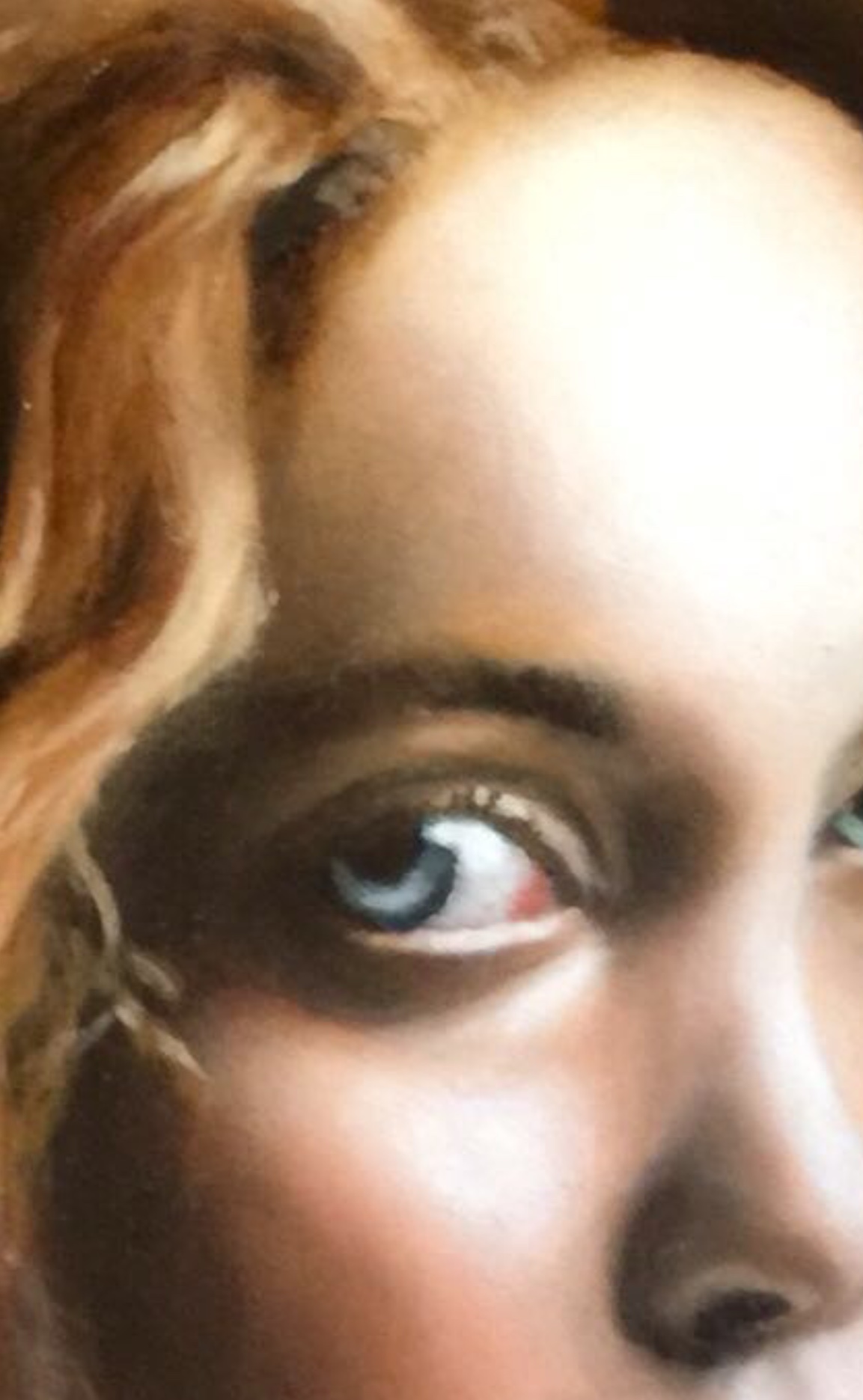
Edwin IJpeij works in oil and egg tempera, building contemporary figurative paintings through a slow, layered process informed by early Netherlandish technique, material research and close attention to surface, light and construction.
The work does not imitate the Old Masters. It takes their discipline seriously: the patience of preparation, the intelligence of layers, the authority of surface, and the belief that a painting is not only an image, but a built object.
Painting as a Built Object

IJpeij’s studio practice begins before the visible image appears.
The support, ground, surface and frame are treated as part of the work’s structure. Fine linen is mounted onto wooden panels. The surface is prepared through multiple layers of traditional gesso. The image is then developed gradually, through egg tempera and thin layers of oil paint.
This slow construction allows light, flesh, fabric and atmosphere to emerge through depth rather than immediate effect.
His background in chemistry informs the way he works with grounds, binders, pigments and the long-term behaviour of materials across layers. Structure and permanence are not secondary concerns. They are part of the integrity of the finished painting.
The Figure
IJpeij’s studio practice begins before the visible image appears.
The figure is central to IJpeij’s work.
He approaches the body not as an object of display, but as a bearer of presence, psychological depth and inner sovereignty. The figure is not treated as effect, but as presence.
Recent works deepen this direction through stillness, dignity and restraint. Vulnerability and composure are held together. The body becomes a carrier of meaning: silent, physical and unbroken.
Historically Informed, Contemporary in Meaning
IJpeij’s work is historically informed without becoming nostalgic.
The technical language may draw from early Netherlandish and Old Master practice, but the concerns are contemporary: presence, dignity, the conditions of looking, and the question of how a painted figure can still hold attention in a culture of rapid image circulation.
Alongside painting, IJpeij works with photography, gilding and process-based image-making as part of a broader visual and material language. In selected works, he also designs and makes his own frames, integrating traditional finishing techniques into the final presentation.
Biography
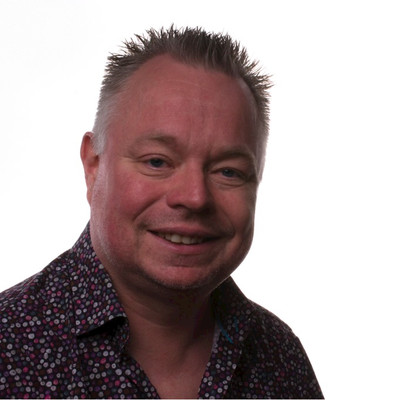
Edwin IJpeij is based in the Maastricht region.
An early encounter with Vermeer’s The Milkmaid at the Rijksmuseum shaped his lasting sensitivity to light, restraint and the quiet authority of the painted image. Although he later studied chemistry, he continued to paint throughout, developing a practice in which technical understanding and artistic intuition remain closely connected.
His work has been shown at Masters Expo Amsterdam and Art Nocturne Knokke, and is held in private collections throughout Europe.